
Operational Savings Through Smarter Refrigeration & HVAC Control
QSR Chain
Refrigeration + HVAC
Multi-location
~$1,500
Annualized electricity savings per location
↓ Fewer alerts
Refrigeration alerts declined significantly post-install
Avoided
Unnecessary emergency HVAC service calls
THE CHALLENGE
Busy restaurant staff rarely noticed critical HVAC and refrigeration issues before they became emergencies, creating food spoilage risk, accelerating equipment wear, and generating costly unplanned service calls.
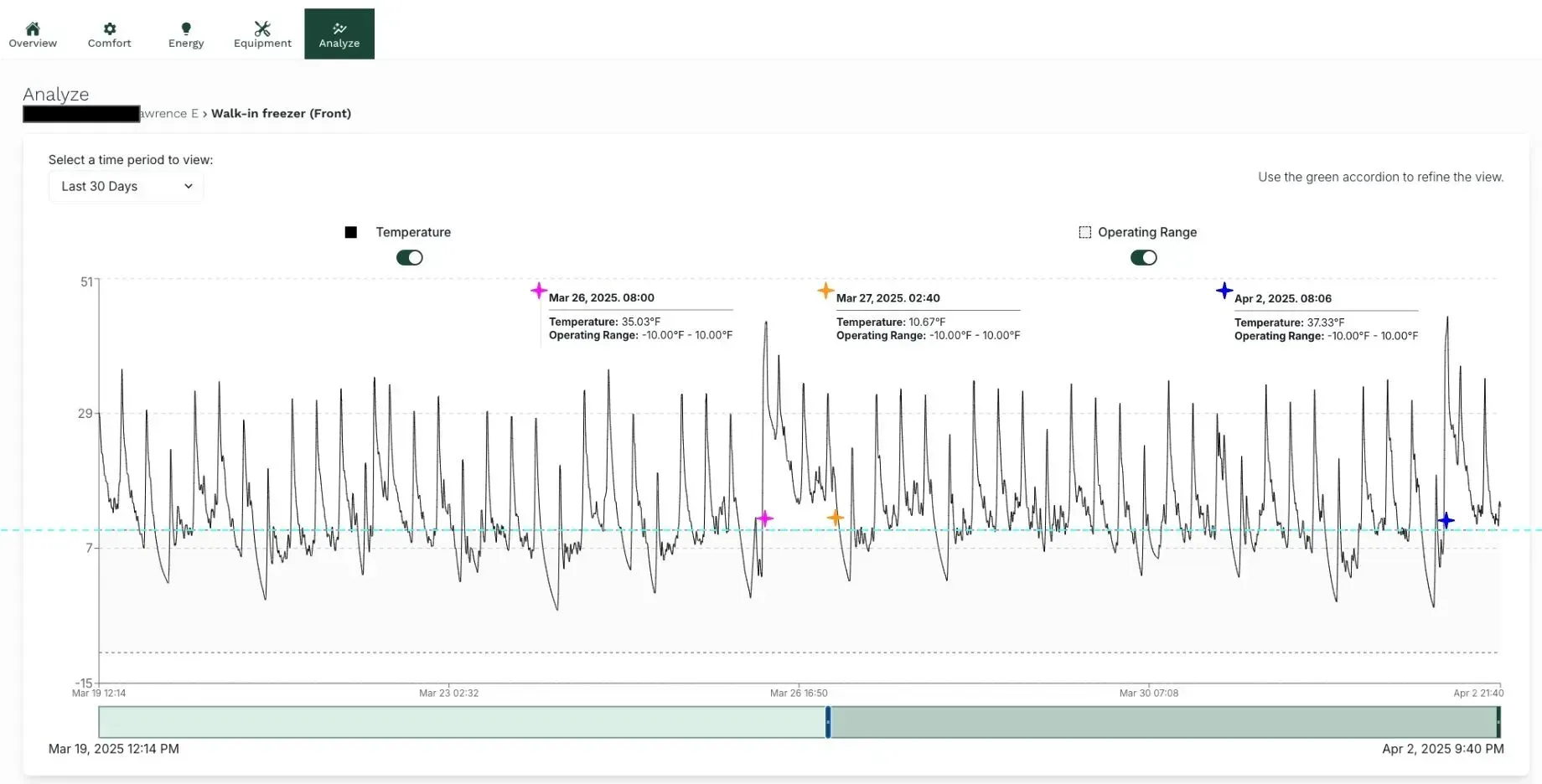
Refrigeration Data That Changed Onsite Behavior
Waterproof sensors installed in fridges and freezers feed data to a Cognition Smart Commercial Control installed nearby. That data is published to the Cognition Dashboard and analyzed by Cognition Intelligence with alerting logic built to filter out routine events like defrost cycles and restocking activity, so alerts mean something.
In the first weeks after install, alerts surfaced a pattern: staff were regularly leaving fridge doors open for extended periods during restocking. The data was undeniable.
With operational data to validate onsite practices, District Managers were able to isolate problematic locations and shifts. Refrigeration alerts dropped significantly in the months that followed as behavior improved.
Moving Beyond Break-Fix HVAC
Cognition's equipment intelligence helped the QSR reduce HVAC runtime, cutting unnecessary wear and utility costs simultaneously. Annualized electricity savings reached approximately $1,500 per location.
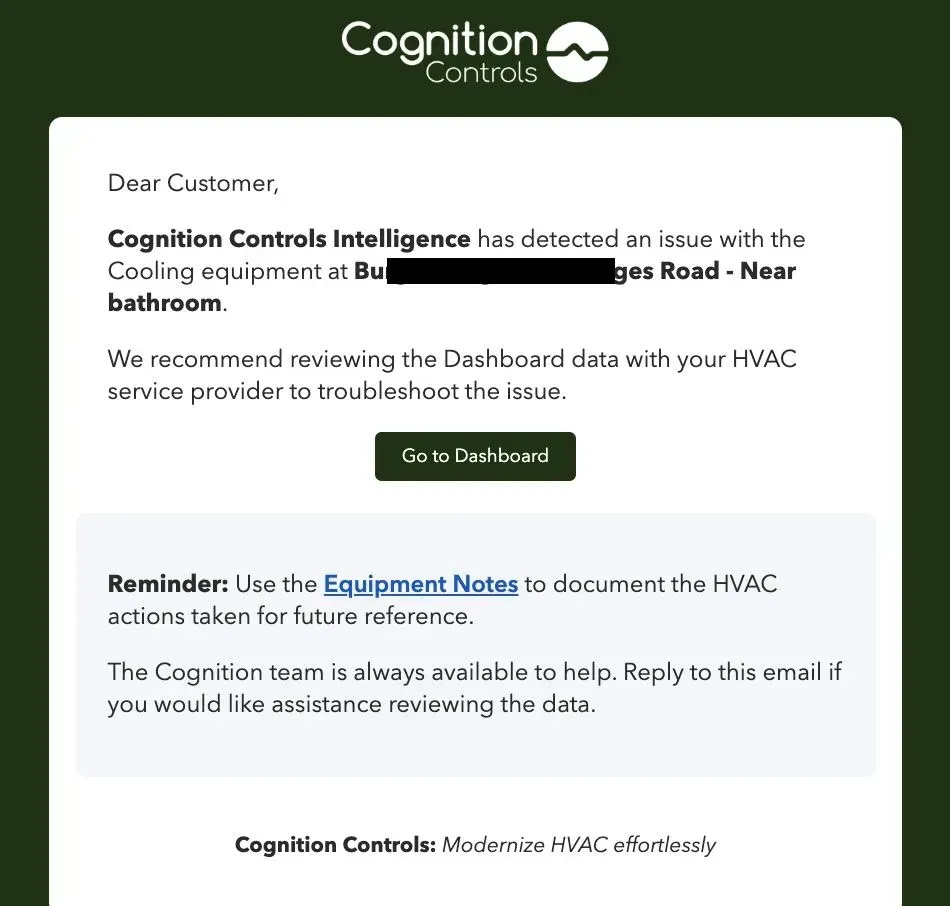
Equipment alerts also gave District Managers the information needed to plan service calls in advance, rather than reacting to failures mid-service. With real-time temperature visibility and the ability for other HVAC units to compensate temporarily, the urgency calculus changed — emergency service calls were avoided.
Fast, Non-Disruptive Installation
Cognition hardware for HVAC and refrigeration was installed by a single HVAC technician, with multiple locations completed per day. Cellular connectivity, Bluetooth sensor pairing, and smartphone-based configuration meant no Wi-Fi integration, no IT involvement, and no networking delays.
TRUSTED BY






Ready to see results like these?
Talk to our team about a rollout plan for your locations.