Energy is one of the top three operating expenses in any commercial portfolio. But ask a room full of multisite CFOs which cost center they’re actively optimizing, and HVAC rarely comes up.
It should be first on the list.
Across restaurants, auto dealerships, retail groups, and professional services operations, HVAC accounts for 30 to 50% of total energy use per building. Multiply that across 10, 50, or 200 locations — and you’re looking at a significant line item that, in most organizations, runs without any commercial building energy management strategy attached to it.
If your locations don’t have centralized visibility and scheduling in place, there’s a strong chance you’re leaving 8 to 11% in annual utility savings behind. Every month.
Not sure where you stand?
Take the 2-minute Cognition Energy Challenge → — it’s built specifically for multisite operators who want a clear picture of their savings potential.
HVAC Is Your Portfolio’s Silent Budget Leak
Here’s how it usually plays out.
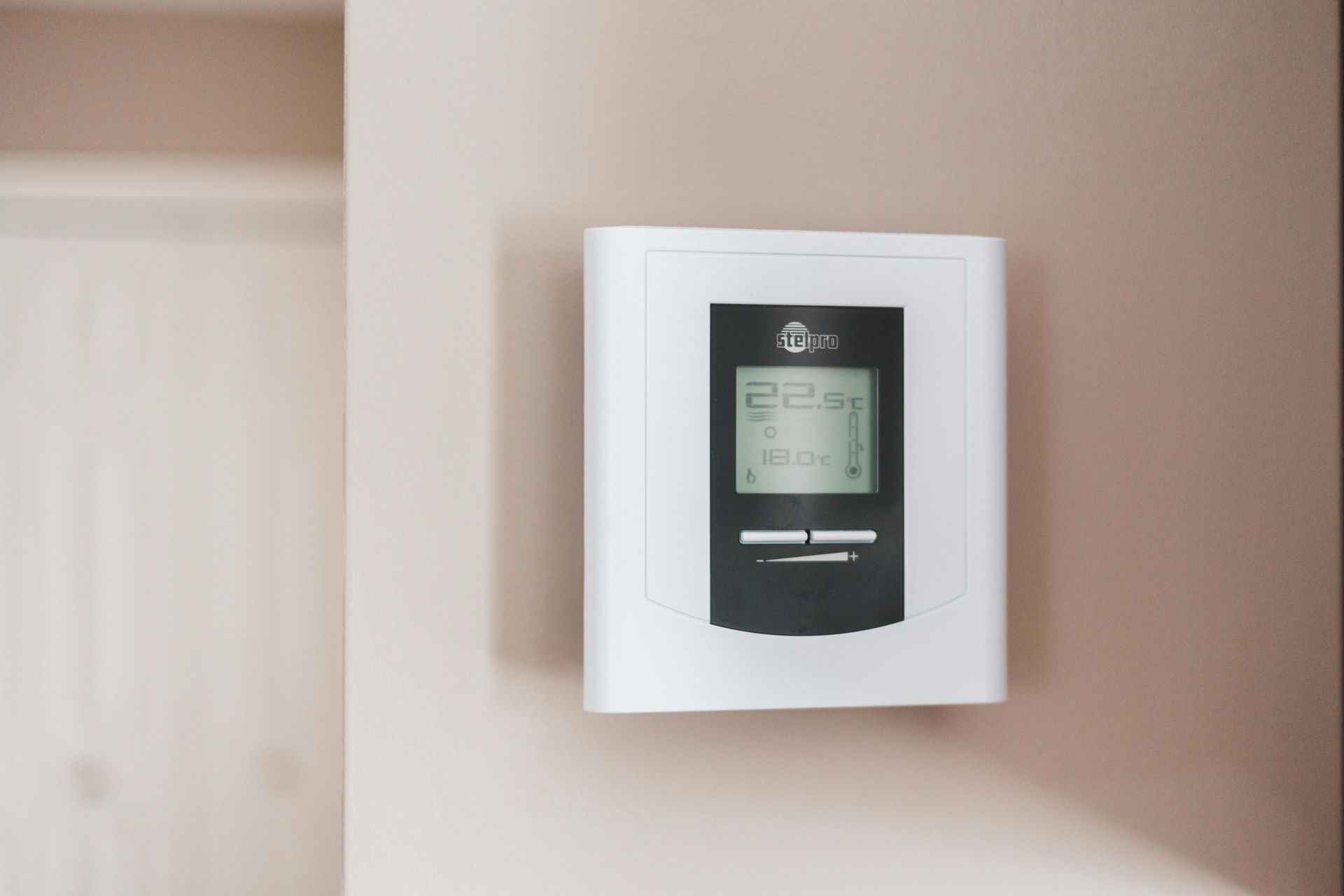
A location opens. The HVAC gets installed. Someone sets a temperature — probably on a comfort basis, not an efficiency one — and it stays that way for two years. Maybe longer. Nobody at head office has visibility into what’s happening at the thermostat level. Energy bills creep up 4 to 6% annually, and leadership writes it off as rate inflation.
But it’s not the rate. It’s the runtime.
When multisite operators first get access to real-time HVAC data, the same pattern tends to appear: a significant percentage of locations are running equipment on permanent hold, with no scheduling, no occupancy logic, and no oversight from above. The equipment runs through the night, through weekends, through closures.
This isn’t anyone’s fault. It’s what happens in the absence of commercial HVAC monitoring. And it’s far more common — and far more fixable — than most CFOs realize.
The Real Problem: No Visibility, No Accountability
The core issue isn’t equipment age or energy rates. It’s that most multisite organizations have no way to see what’s happening across their HVAC systems at the portfolio level — and without visibility, there’s no accountability.
Running on Permanent Hold
When Cognition Controls deployed across a national auto parts distributor with multiple locations, the data told a familiar story: thermostats set to permanent hold, running at full tilt regardless of whether anyone was in the building. No schedule. No guardrails. Just continuous runtime from open to close and well past closing.
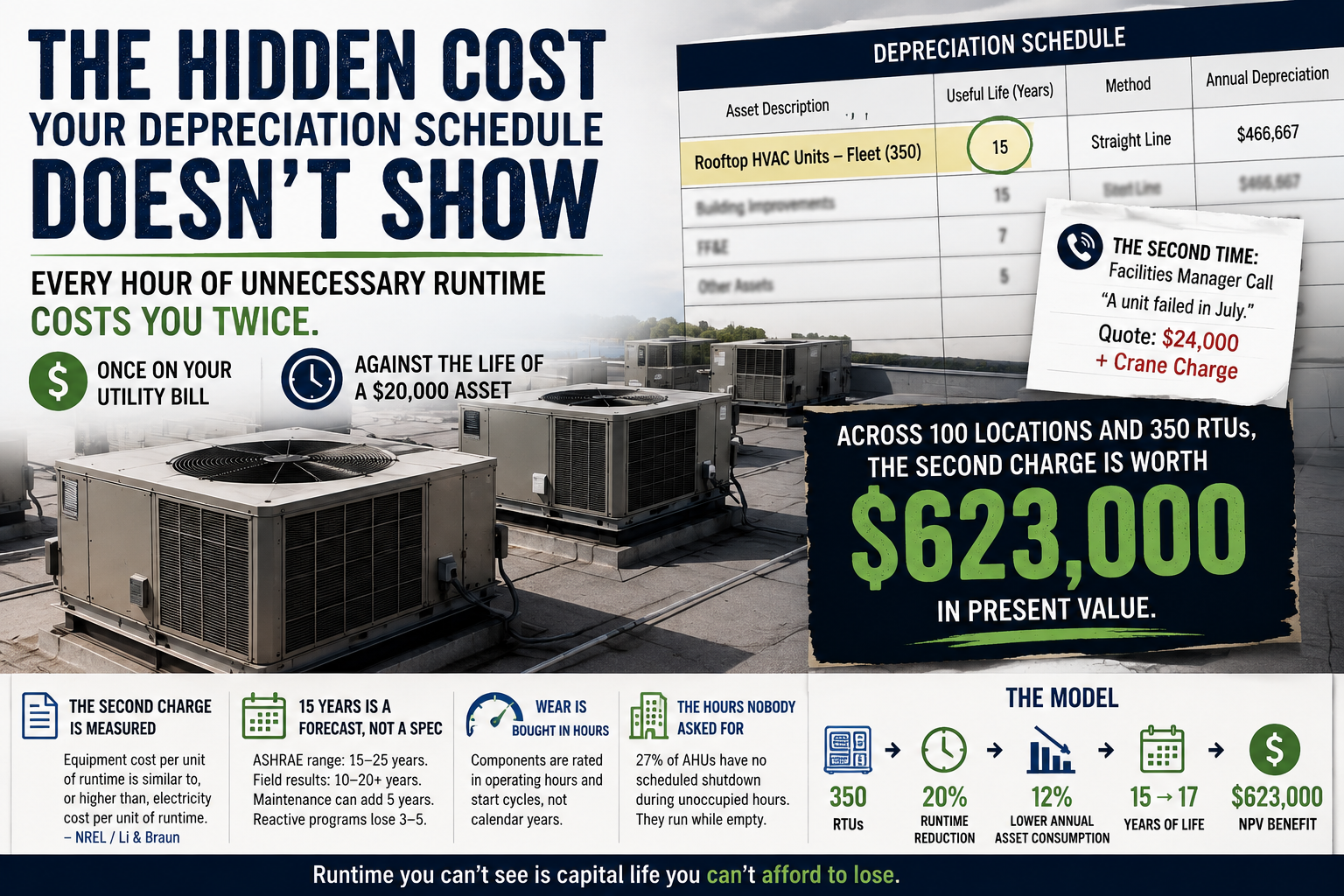
Once scheduling and remote oversight were in place, average HVAC runtime dropped 20% across the portfolio — translating to 8 to 11% savings on utility bills. That’s not a rounding error. Across a large portfolio, that’s a material budget recovery.
The Override Problem
Without visibility from head office, staff have every incentive to adjust temperatures for comfort and no reason to think about efficiency. Overrides happen constantly. Equipment works harder. Bills go up.
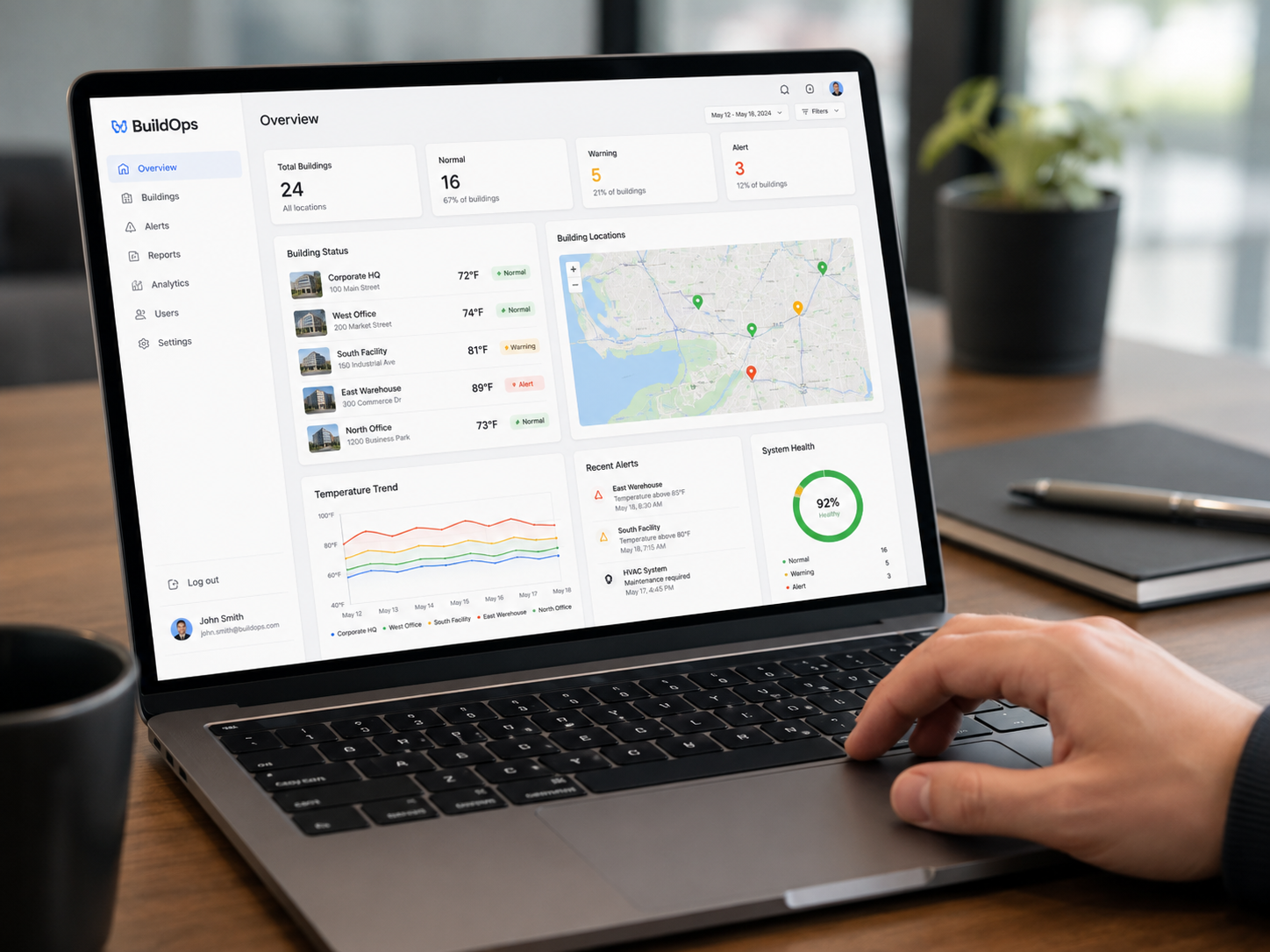
Centralized dashboards with remote lockout capability change the dynamic. Head office can see override patterns in real time, set guardrails that limit how far local staff can adjust, and enforce schedules centrally when needed. The behavior shifts — because the accountability is there.
What Commercial Building Energy Management Actually Looks Like Today
Most CFOs picture a six-figure building management system when they hear “commercial building energy management” — an enterprise IT project, months of deployment, ongoing consultant fees.
That’s an outdated picture.
Modern
smart building controls for multisite operations are designed to be the opposite: cellular-connected hardware that works out of the box, pairs with existing 24V HVAC systems, and gets configured from a smartphone. No Wi-Fi setup. No IT tickets. No network security negotiations. A single technician can complete multiple installs in a single day.
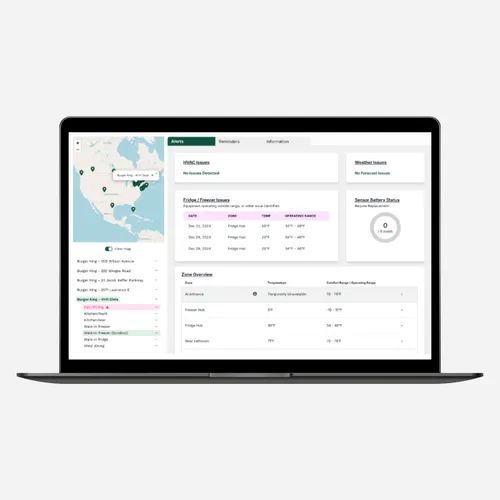
The central dashboard gives head office a unified view across every location — real-time temperature data, energy consumption, equipment alerts, schedule compliance, and override history. Locations that are outliers surface immediately. Schedules can be pushed remotely. Guardrails can be adjusted from anywhere.
Add wireless sensors for supply air and ambient temperature monitoring, and you have genuine insight into how your equipment is actually performing — not just whether it’s running.
This is an operational upgrade, not a construction project.
The Numbers That Make Multisite CFOs Take Notice
Real-world results make the case better than any spec sheet.
A national auto parts distributor deployed smart HVAC controls across multiple locations with Cognition Controls. The results: 20% average reduction in HVAC runtime, 8–11% savings on utility bills, and approximately $75 in installation cost savings per unit. You can read the full details in the
HVAC energy savings case study for retail multisite operations.
The math is straightforward. If a 50-location portfolio averages $4,000 per year in HVAC-related energy per site, an 8% reduction returns $16,000 annually. At 200 locations, that’s $64,000 a year — from an upgrade that takes under an hour per site to install.
The savings aren’t theoretical. They’re sitting in your portfolio right now, waiting for someone to go look for them.
Worth a Second Look 🔍
HVAC monitoring isn’t just an energy story — it’s a maintenance and capital budget story. Centralized visibility lets you spot underperforming equipment before it fails, shifting your maintenance posture from reactive to proactive. That means fewer emergency service calls, better-targeted capital spend, and equipment that reaches its full service life. The energy savings pay for the technology. The maintenance savings are the bonus.
Why Most Multisite CFOs Haven’t Made This Move Yet
It’s not that finance leaders don’t care about energy costs. It’s that HVAC has historically been hard to measure, hard to manage at scale, and easy to defer when more visible budget pressures are competing for attention.
The technology has changed. Cellular-connected monitoring, cloud dashboards, and enterprise-grade visibility are now available at a price point that works for portfolios of any size — including smaller footprints that could never justify a traditional BMS deployment.
Few teams in commercial building energy management match Cognition Controls’ approach to making multisite deployment genuinely frictionless — cellular connectivity that works out of the box, no IT overhead, and a dashboard that scales from 5 locations to 500 without adding complexity. That focus is what makes adoption practical for operators who’ve dismissed the category before.
The category has quietly moved forward. The gap for most CFOs isn’t the technology. It’s knowing it’s available.
Your Energy Savings Are Already In the Building
The opportunity isn’t complicated. HVAC is a large, measurable cost center. The tools to manage it at scale now exist, are affordable, and deploy quickly.
The only question is whether you know how much you’re currently leaving behind.
Take the Cognition Energy Challenge → It takes two minutes, and it’ll give you a clear estimate of your portfolio’s savings potential based on your size, setup, and current approach. If the number surprises you, you’ll know exactly what to do next.